

How Often Does a Small El Paso Business Really Need to Post — and What to Post
Wondering how often your business should post on social media? The answer might surprise you. You don't need to post every day to stay visible. For most small businesses, 3–5 quality posts per week is the sweet spot. Learn which platforms deserve your attention, what to post when you're out of ideas, and how consistency—not constant posting—helps you attract more customers.
Your Content Calendar
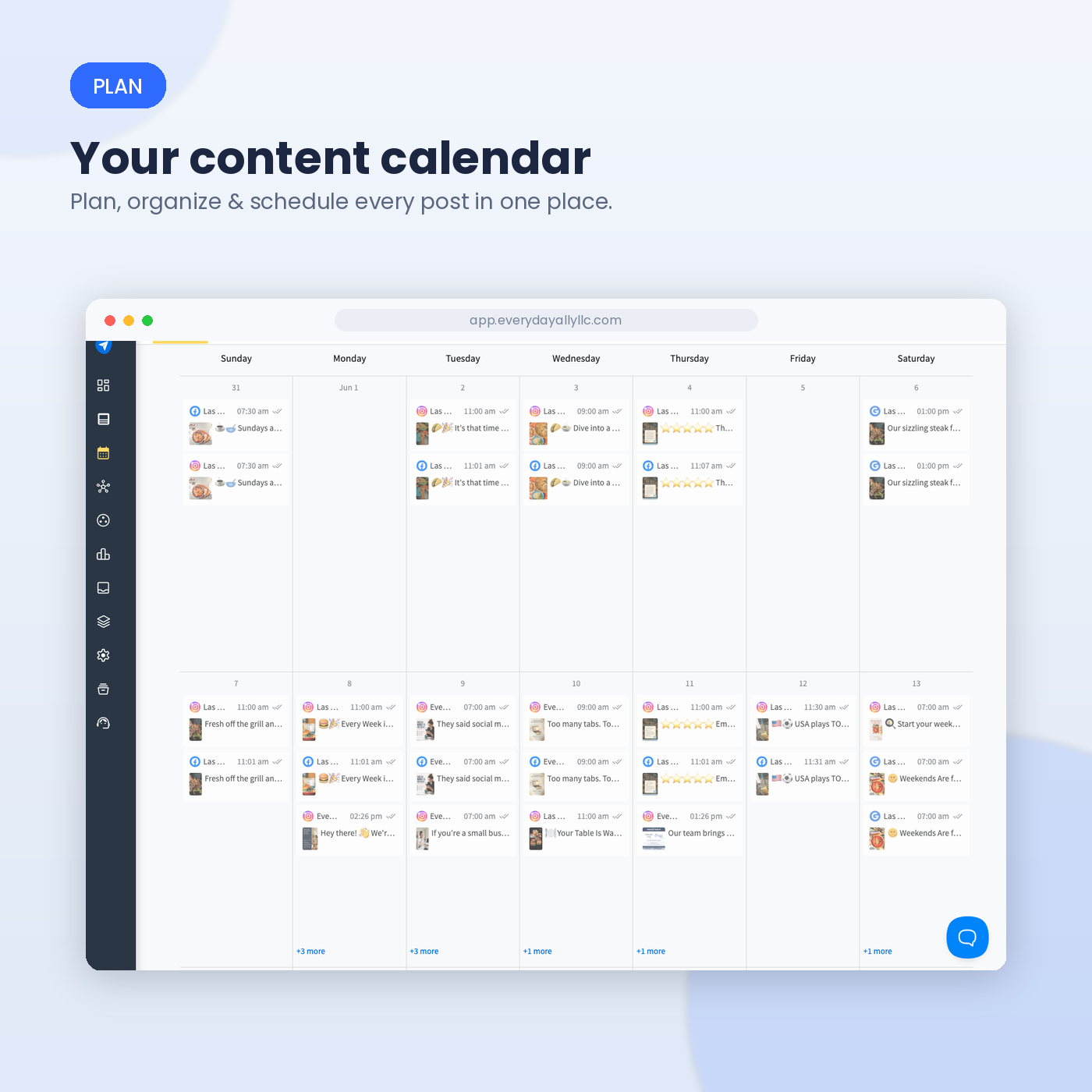
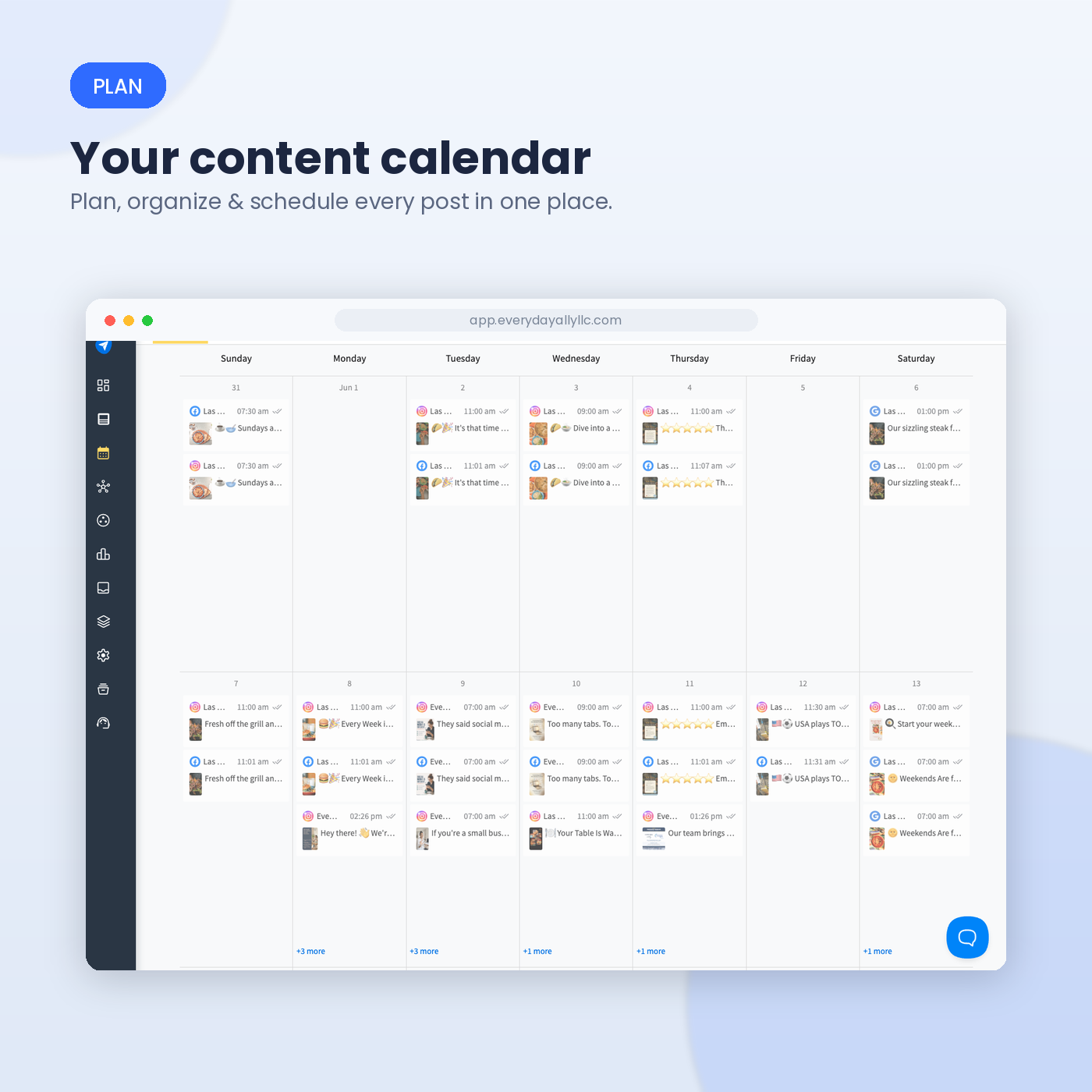
Everyday Ally plans, organize and schedules your content in one place.
If you've ever stared at your phone wondering whether today is "a posting day," you're not alone. It's one of the most common questions small business owners ask, right up there with "how do I get more reviews?" and "why isn't anyone seeing my posts?" The honest answer is less complicated than most social media gurus make it sound — and it has nothing to do with posting every single day.
The short answer: 3-5 times a week, not daily
For most small, local businesses, the sweet spot is three to five posts per week across your main platforms. That's enough to stay visible in the algorithm and in your customers' minds, without burning you out or turning content creation into a second full-time job.
Daily posting sounds impressive, but it's rarely sustainable for an owner who's also running the actual business. And here's the thing: a rushed, low-effort post published just to "keep the streak going" does less for you than a thoughtful post published three times a week. Consistency beats volume every time — a steady rhythm you can actually maintain will outperform a burst of daily content that fizzles out after two weeks.
It varies a bit by platform
Not all platforms want the same thing from you:
Instagram rewards businesses that post 3-5 times a week, especially when you mix in Stories and Reels between feed posts. This is usually the highest-value platform for restaurants, retail, and service businesses with anything visual to show off — food, finished projects, before-and-afters, your team at work.
Facebook still matters a lot for local audiences, particularly anyone over 35 searching for businesses in their neighborhood. Facebook tends to reward slightly more frequent activity — up to once or twice a day if you have the content to support it — but 4-5 solid posts a week works just fine for most small businesses.
LinkedIn, if you're B2B or working with other local businesses, only needs 2-3 posts a week. This platform rewards clarity and relevance over volume — nobody wants a feed clogged with low-effort updates.
The takeaway: pick the one or two platforms where your actual customers spend their time, and focus your energy there instead of spreading yourself thin trying to be everywhere.
Why inactivity is riskier than imperfection
Here's the uncomfortable stat worth sitting with: the majority of social media users say that if a business goes quiet or stops responding, they'll simply take their money to a more active competitor. In a city like El Paso, where word-of-mouth and local loyalty carry real weight, a stale or abandoned page can quietly cost you customers you never even knew were looking.
That doesn't mean you need to panic-post. It means an empty page is worse than an imperfect one. A business posting three so-so photos a week beats a business that posted once in April and never again.
So what should you actually post?
Frequency is only half the equation — the other half is having something worth posting. If you're staring at a blank content calendar, here's a simple rotation that works for almost any local business:
Behind the scenes. Customers trust businesses they feel like they know. A quick video of prep in the kitchen, a photo of your team setting up for the day, or a shot of the workspace mid-project builds familiarity fast.
Customer moments. A happy customer, a finished job, a five-star review turned into a graphic. Social proof is some of the highest-converting content you can post, and it costs you nothing but a photo and a caption.
Answers to real questions. Think about what customers ask you on the phone or at the counter every week. "Do you take walk-ins?" "How long does this usually take?" "What's your busiest time?" Turning those into short posts does double duty: it's useful content, and it cuts down on repetitive questions later.
Local relevance. A shoutout to a nearby event, a seasonal tie-in, or a nod to something happening in the neighborhood signals that you're a real, present part of the community — not a faceless account posting generic stock content.
The occasional offer or reminder. Not every post needs to sell something, but one out of every five or six is a good ratio for a gentle nudge — a reminder to book, a limited-time offer, or simply "we're open and here for you."
The real goal: a rhythm you won't abandon
The businesses that win at social media long-term aren't the ones with the fanciest content — they're the ones who show up consistently, month after month. Pick a realistic number (start with three posts a week if you're not sure), pick your platform, and build a simple rotation from the ideas above. You'll spend less time agonizing over "what do I post today" and more time running your business.
If putting together a posting rhythm still feels like one more thing on an already-full plate, that's exactly the kind of thing we help local businesses figure out — from the calendar to the content itself. Reach out and let's build a plan that fits how you actually work.
Sources consulted for this post: Buffer's 2026 Social Media Frequency Guide, HeyOrca's Optimal Posting Frequency by Platform (2026), The Small Business Expo.