


Instagram vs. Facebook for Local El Paso Businesses: Where Your Customers Actually Are
Instagram or Facebook for your El Paso business? Here's how to tell where your customers actually are — and post to both without doubling your work.

What’s the right platform for your business?
If you run a business in El Paso, you've probably heard some version of the same advice a hundred times: "You have to be on social media." What nobody tells you is which platform actually deserves your limited time. You've got a shop to run, a staff to manage, and maybe forty-five minutes a week to spend on marketing if you're lucky. Spreading yourself thin across every app is a recipe for burnout and posts that go nowhere.
So let's cut through it. Instagram and Facebook are both owned by Meta, they share an ad system, and they can even cross-post to each other. But they are not the same tool, and your customers don't behave the same way on them. Here's how to figure out where your people actually are.
The Quick Answer: Follow the Ages
The single biggest difference between the two platforms comes down to who's using them.
Instagram skews younger. In the U.S., adults aged 25–34 make up the largest slice of Instagram's audience at about 28%, with 18–24-year-olds close behind at roughly 27%. Nearly two-thirds of Instagram users are between 18 and 34, and about three in four Americans aged 18–29 are on the platform. It also leans slightly female, at roughly 55% women.
Facebook is where the grown-ups live. Around 71% of U.S. adults use Facebook, and its strength is with people 30 and older. Roughly 80% of adults aged 30–49 use it, and even among Americans 65 and older, about 57% are still active. That older-user loyalty is something no other major platform can match.
Translate that to El Paso: if your customers are quinceañera planners, first-time homebuyers in their late twenties, taqueria regulars in their thirties, or families booking birthday parties, you're likely fishing in both ponds. But the tone and the content need to match the water.
What Each Platform Is Actually Good At
Think of it less as "young vs. old" and more as "discovery vs. community."
Instagram is a discovery engine. It's visual-first, it rewards good photos and short video (Reels), and its Explore page and hashtags can put you in front of people who've never heard of you. If you sell something people want to look at — food, hair, nails, floral arrangements, homes, clothing, tattoos — Instagram is where a great photo turns a stranger into a walk-in.
Facebook is a community hub. It's built for connection, longer posts, events, reviews, and local groups. El Paso runs on Facebook groups — neighborhood pages, buy-sell-trade boards, foodie communities, mom groups. A single recommendation in one of those groups can do more for a local business than a month of ads. Facebook is also where people go to check your hours, read your reviews, and message you a question before they drive over.
How to Pick (Without Overthinking It)
You don't have to choose forever. But if you only have the energy for one, start here:
Choose Instagram if your business is visual and you're trying to reach a younger, trend-aware crowd. Restaurants, cafés, salons, boutiques, bakeries, photographers, and real estate agents showcasing beautiful listings usually win here.
Choose Facebook if your customers are 35 and up, or if word-of-mouth and local groups drive your business. Home services, contractors, insurance agents, medical and dental offices, churches, nonprofits, and family-oriented businesses tend to see stronger returns.
Do both — but lightly — if your audience spans generations, which honestly describes most El Paso small businesses. The trick is not to double your workload.
The Time-Saving Move: Post Once, Show Up Twice
Here's the good news for your forty-five minutes a week: Instagram and Facebook are connected through Meta's tools, so you can create a post or a Reel once and publish it to both at the same time. Meta Business Suite lets you schedule content for both platforms from a single screen, so you're not logging in and out or copying captions by hand.
A realistic weekly rhythm for a busy owner might look like this: one photo post that goes to both platforms, one short video (Reel) that also goes to both, and one Facebook-specific touch like responding to reviews or posting in a local group. That's three actions, not six, and it keeps you visible on both without eating your week.
Don't Forget the Thing That's Not Social Media at All
A quick but important aside: for a local business, your Google Business Profile often out-earns both Instagram and Facebook when it comes to people ready to buy right now. Someone searching "breakfast tacos near me" or "AC repair El Paso" is a customer with their wallet already out. Social media builds familiarity and trust over time; Google search captures the person who needs you today. Ideally you're covering both — but if you've been pouring energy into Instagram while your Google profile sits half-finished, that's the first leak to plug.
The Bottom Line
Stop asking which platform is "better." Ask where your customers spend their attention. If they're young and you sell something worth looking at, lead with Instagram. If they're a bit older or your business runs on local word-of-mouth, lead with Facebook. Most El Paso businesses benefit from a light presence on both, powered by one weekly batch of content posted to both at once.
Pick your lead platform, commit to a simple weekly rhythm you can actually sustain, and let the other one ride along. Consistency on one platform beats exhaustion across five every single time.
Not sure where your customers are hiding, or tired of guessing at content every week? That's exactly the kind of thing we help El Paso businesses sort out — a simple plan you can stick to, so your marketing works without taking over your life. Reach out and let's map it to your business.
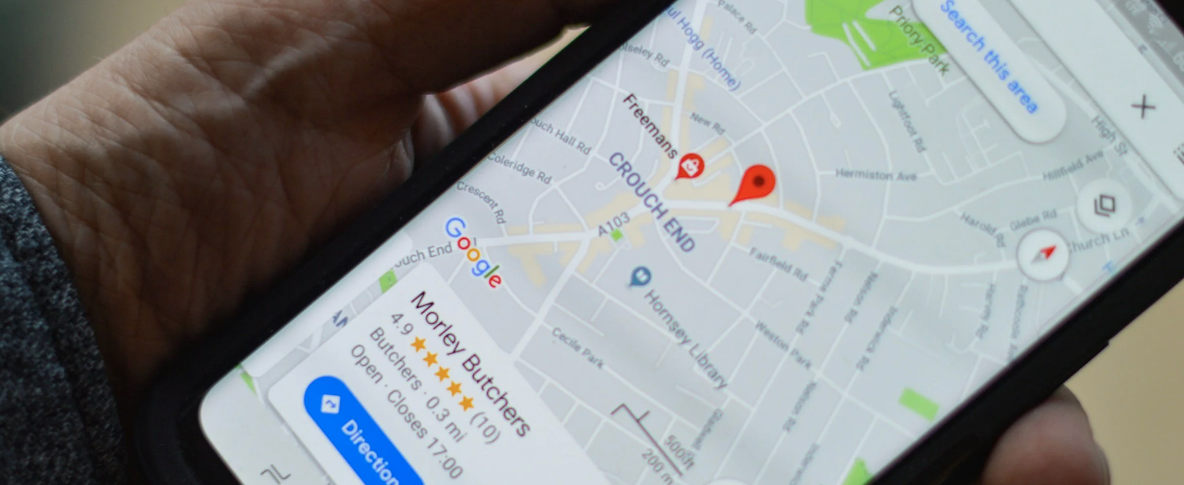
Why El Paso Businesses Lose Customers to Competitors With a Better Google Profile
Your real storefront is now the Google map that appears when someone searches "near me." Here's how El Paso businesses lose customers to a better Google profile, and how to fix yours fast.
Picture two taquerias three blocks apart on the East Side. Same menu, similar prices, both family-run for years. One has a steady line out the door at lunch. The other is quietly slower every month and can't figure out why. The difference often isn't the food, the location, or even the prices. It's what shows up the moment someone in El Paso pulls out their phone and types "tacos near me."
That moment — the search, the map, the little list of three businesses Google decides to show first — is where customers are won and lost today. And far too many local owners are handing those customers to the competitor down the street without ever knowing it happened.
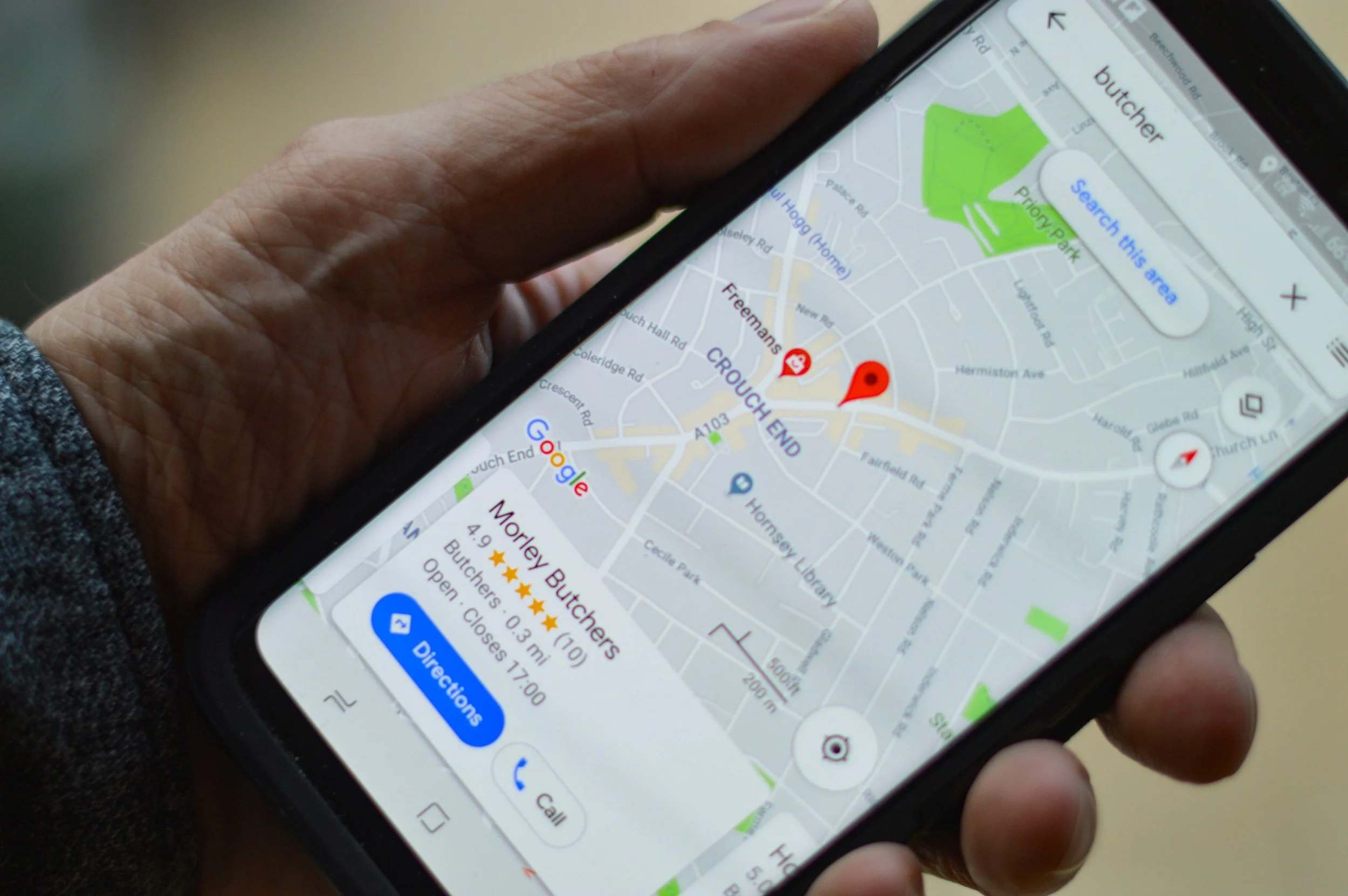
The decision is made before anyone walks in
Here's the uncomfortable truth: most people choose your business, or your competitor's, before they ever see your front door. Nearly 53% of local consumers look at a Google Business Profile before they even visit a company's website, and "near me" searches now happen 1.5 billion times a month — roughly 50 million local searches every single day. Close to half of consumers say they regularly add "near me" to what they're searching for.
For an El Paso business, that means your real storefront isn't just on Mesa, Montana, or Zaragoza anymore. It's the Google map that pops up when someone at home, at work, or stuck in traffic on I-10 decides they want what you sell. If a competitor's profile looks more complete, more active, and more trustworthy than yours, the search engine quietly points the customer their way. You never get a chance to compete.
What a "better" profile actually looks like
When owners hear "better Google profile," they often picture something complicated. It isn't. A stronger profile usually just means a more complete and cared-for one. The competitor stealing your customers has likely done a handful of unglamorous things you haven't gotten around to.
Their hours are correct, including holidays — so nobody drives over to a locked door and leaves a frustrated review. Their category is specific ("Mexican restaurant," not just "restaurant"). They have real photos, plenty of them, updated more than once every two years. Their phone number and address match exactly what's on their website and Yelp. And critically, they have reviews — recent ones, with replies from the owner.
Reviews are the scoreboard customers trust
If there's one place El Paso businesses fall behind, it's reviews. And the numbers explain why it matters so much: 98% of consumers read online reviews for local businesses, and companies with 50 or more Google reviews earn 266% more leads than those with fewer than ten.
Think about your own behavior. Between a place with 14 reviews and a 3.9 rating and one with 220 reviews and a 4.6, you click the second one almost without thinking. Your customers do the same to you. The competitor isn't necessarily better — they've just built up a wall of social proof while you've been too busy running the actual business to ask anyone to leave a review.
The fix is mundane but powerful: ask. Ask happy customers at checkout, in a follow-up text, on the receipt. Reply to the reviews you already have, good and bad, because future customers read those replies as a sign you're paying attention. A calm, professional response to a one-star review often does more to win trust than the five-star reviews above it.
"Near me" is local, and you're already local
The encouraging part for El Paso owners is that local search rewards exactly what you already are: nearby and relevant. "Near me" searches have grown 150% faster than general searches over the past two years, and the businesses that win them are usually the ones that simply look the most active and trustworthy to a person standing a few miles away.
That's an advantage a national chain can't fully replicate. You can mention real El Paso neighborhoods, post about local events, and answer questions in a way that feels like a neighbor, not a call center. When your profile signals "we're right here, we're open, and people love us," Google has every reason to put you in front of that 50-million-a-day stream of local searchers.
What is this costing you right now
It's easy to treat the Google profile as a "someday" task because the cost is invisible. There's no bounced check, no angry customer — just a phone that rings a little less and a lunch rush that's a little thinner than it should be. But consider that 16% of businesses get more than 100 calls a month from their Google profile alone, and many appear in over 1,000 "discovery searches" monthly. Every one of those is a customer deciding between you and someone else. A neglected profile means you're losing a quiet percentage of them every single day, month after month, without a single line item to point to.
The good news: this gap closes fast
The flip side of all this is genuinely hopeful. Unlike a billboard or a remodel, fixing your Google presence costs almost nothing but attention. An afternoon spent completing your profile, uploading fresh photos, and texting your ten most loyal customers for a review can start shifting the map in your favor within weeks.
If you'd rather not wrestle with it alone, that's exactly the kind of thing we help El Paso businesses set up — once, correctly, so it keeps working for you. Either way, don't let the taqueria down the street keep winning a competition you didn't know you were in. Open your Google Business Profile today, look at it the way a customer would, and start closing the gap.
Want a quick, no-pressure look at how your Google profile stacks up against your competitors? Reach out, and we'll walk you through it.